

Monday, November 18, 2013
Opportunity in Overalls
Saw this on Facebook today. Thought it was worth passing along on the Holmes Spot!

Sunday, November 17, 2013
Mike Holmes Throwback -- 2007 Construction Soap Opera Nightmare
Once in a while, while combing the internet for interesting stuff to post I run across something from yesteryear. 2007 wasn't that long ago, was it??? I found this 2007 news article about a homeowner that even Mike Holmes wouldn't touch. That's right, Joe and Joanne West had a home that was even too much for even Mike, and if Mike Holmes says your home is too expensive to fix, then you know your house is reaaaaaally jacked up. I wanted to dig a little further into this story and found an article written a few weeks later (non-Mike related) that gives a little more information about just how bad the West's home actually was. You can read it here if you like. It seems that no building permits were issued by the builder until AFTER the house was built. No building permits means no building inspections, and it's obvious that some very serious corners were cut, to say the least. So what about their new home warranty? Yeah, that's a whole different ball of wax. According to the article, the warranty company decided that the best solution given the "deteriorated" relationship between the homeowner and the builder (deteriorated? more like nuked back to the stone age) was to pay out the damages monetarily. In other words, the Wests would be compensated for the damages to their home with money, so they could go get someone else other than the builder to fix the problems. Sounds reasonable, right? Well unfortunately, at the time the article was written, the West family had yet to see a single dollar from Tarion, their home warranty company. This prompted the Wests to file a lawsuit against the City of Hamilton for $1.5 million. But wait... it gets fuzzier. According to another source, it seems that because the builder didn't get permits, the city never issued stop work orders on construction, and because of this the new home warranty will not cover some of the items! What a quagmire! Definitely the plot of a construction soap opera nightmare, if there ever was one. Not sure how it ended up for the West family, but by the looks of the articles about their saga, I'm going to take a guess that it didn't turn out well.
From TheSpec.com:

From TheSpec.com:
Homeowners left 'high and dry,' says star of Holmes on Homes
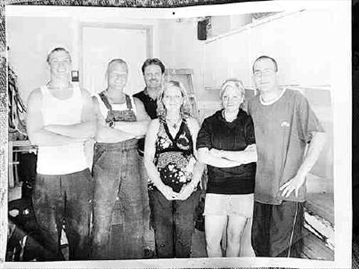
hs1606705 2007-04-07-1
Joe West and his wife are suing the city and builder. From left, are Mike Holmes Jr., Mike Holmes Sr., Joe West, Joanne West, Lindsey West, and Luke Pietruszka, Lindsey's boyfriend.

Hamilton Spectator
(Apr 7, 2007)
Joe and Joanne West's house at 55 Lanza Court was too much for Mike Holmes.
Holmes, star of HGTV's popular Holmes on Homes, scouted the Wests' house last September as a possible candidate for his renovation show. He decided to take a pass, in part because the repairs needed would be too extensive.
"I remember it very well," said Holmes. "It was very sad. There were so many things wrong with that house. I was not impressed."
The Holmes on Homes show highlights real homeowners and their construction horror stories. Holmes uses his contractor's expertise to fix the mistakes of what he calls "a lot of sloppy, lazy and dangerous work" that he sees in the construction business.
Holmes said he was tipped off about the Wests' home by an e-mail he received. The Wests aren't sure who sent it, other than to say they weren't responsible and were surprised when they were contacted by the show.
"He knocked on our door and wanted to review the home," said Joe West. "He had an issue with the dollar amount that would have to go into the house to repair it.
"He said that we have some major issues here," West added. "He wouldn't touch it."
What really angered Holmes, however, was the fact that there were still a lot of unresolved issues relating to permits and jurisdictional wrangling that were still outstanding, even though the Wests had already been living in the house for more than a year.
"I was really, really bothered by it," said Holmes. "Everything seemed to have been abandoned - the permit process, government officials, you name it - they sort of left the homeowners high and dry.
"If I remember, there wasn't even an occupancy permit on the house and you're not supposed to move in without it."
Holmes even approached CBC's Marketplace show to see if the producers would be interested in taking a look at the Wests' situation.
"As far as I was concerned, this had to be publicized," Holmes said.
"I don't know who's at fault or who's going to stand up to it, but somebody's got to step forward and say 'Hey, there's a problem here, let's address it.'
"Does it have to be me? Do I have to come in and practically take the house down and do it again?"
Friday, November 15, 2013
Mike Holmes on eTalk
When it comes to finding a contractor, Mike Holmes loves to tell people to slow down and take their time. In fact, finding the right contractor should take longer than the job itself! In this video, Mike reiterates that we can't hire a contractor by going through a drivethru. He also states that oftentimes, how something looks visually is an illusion, and that we should look past the beauty to how it was made.
Wednesday, November 13, 2013
Mike Holmes on Winter and Furnace Maintenance
There's nothing worse than getting into your car on your way to work, only to realize your battery is dead. Or how about turning on your computer, only to find that a virus is slowing it down. Everything mechanical needs a little bit of maintenance to keep it working. If you don't properly maintain your car or your computer, they're going to eventually stop, and probably at the most inconvenient time possible. The same goes with your home's furnace. Furnaces don't break down in the summer. Why? The answer should be obvious -- because it's only when the weather starts to get cold that we go to turn them on, only to find that there's a problem. Wouldn't it be much better to have your furnace checked out in the warmer months before the temperature drops to make sure it's good to go when you need it? In this article, Mike talks about properly maintaining your furnace by having it checked by an HVAC technician. A pro will know how to spot leaks which can make your furnace less efficient and drive up your energy bill. Mike also talks about things homeowners can do, such as regularly changing the filter and having CO2 detectors, especially if you have a gas furnace. A little bit of preventative maintenance can go a long way in saving you big bucks down the road, and also prevent your furnace from going out on a cold winter's night when you need it the most!
From the Montreal Gazette:

Temperatures are getting dangerously close to freezing — in some cases they have already dropped below — and the last thing you want is to turn on your furnace and find it doesn’t work.
Newer furnaces have light indicators on them that can tell you if there’s problem. The lights will start to flash differently depending on what the issue is. On the furnace itself there should be a sticker that tells you what the different flashes mean. It might be behind a panel, so check your owner’s manual.
That way you can tell your HVAC technician that there’s an issue with something specific in the system, and they can bring the right tools and parts when they come to check it out. That can save crucial waiting time in between repairs — something that will definitely matter on a cold winter night.
If you haven’t already had your furnace serviced by a licensed HVAC technician, now’s the time. They’ll check all the different components of the furnace and make sure it’s up for the challenge of meeting your winter heating demands.
For example, they will check the thermostat, the registers (make sure they’re clean and not blocked by anything), the flue, vents and fan. And if your furnace is gas, they will check the igniter. Sometimes sediment or dust can accumulate on the igniter, which stops it from working. Some homeowners think they need to replace the whole system when all it needed was a little clean up.
A pro will also check the ducts to make sure they’re properly sealed and that there are no air leaks. HVAC pros or an energy auditor can tell you how much air your system is losing, which could be up to 20 per cent.
If the ducts are accessible, like in an unfinished basement, they can be sealed with heat-resistant caulking, aluminum or metal foil tape — not duct tape — or the original mechanical seal can be rebuilt.
But stopping an air leak isn’t always easy. And often finding it is a challenge.
If it’s in the ductwork that’s behind a wall or in the ceiling, the drywall will need to come down. Then it becomes a matter of stopping the air leak and making it look like the repair never happened, which means replacing, repairing and repainting the drywall.
Then you keep your furnace in good shape by replacing the air filter. At least once every three months is standard, but every month is better — every two weeks if you’re renovating.
You especially want to replace it every month in the cold season because your furnace works harder during these months. It pushes and filters more air, which means the filter gets clogged faster. A clogged filter doesn’t work, and it can wear out your furnace prematurely.
Gas is still king when it comes to forced-air heating systems. But it has its safety issues, like gas leaks.
Every level in your home should have a carbon monoxide (CO) detector — there should be one directly outside bedrooms — and you should test them every month. Plus, testing is easy.
Every CO detector has a test button. To test the system, hold the test button down for two to five seconds. You should hear a loud beep. If it sounds weak it’s time to change the batteries. Regardless, the batteries need to be changed twice a year. A good time to do it is when we change the clocks back and forward.
Some newer homes have CO detectors and smoke alarms that are hardwired directly into the home’s electrical system. But they must have a battery back up, no exceptions. That’s why you need to test your alarms, hardwired or not.
Is hiring a pro to check your furnace worth the time, effort and money? Absolutely. If you don’t have hundreds of dollars just lying around, you might not see it that way, and I get it.
But if you think about the money you could be losing every month because of an air leak or because your system is too old or inefficient — or worse, risk a very cold winter — it might help put things in perspective, and make them right.
Catch Mike Holmes on Holmes Makes It Right, Tuesdays at 9 p.m. on HGTV. For more information, visit hgtv.ca. For more information on home renovations, visit makeitright.ca.
From the Montreal Gazette:
Mike Holmes: Winter means it’s time for a furnace checkup
An HVAC technician can keep you warm on long, cold nights
After a decade, Mike Holmes still cares because he knows the work he, his crew and others do makes a real difference to the people they help.
Photograph by: Alex Schuldt/The Holmes Group, Postmedia News
Temperatures are getting dangerously close to freezing — in some cases they have already dropped below — and the last thing you want is to turn on your furnace and find it doesn’t work.
Newer furnaces have light indicators on them that can tell you if there’s problem. The lights will start to flash differently depending on what the issue is. On the furnace itself there should be a sticker that tells you what the different flashes mean. It might be behind a panel, so check your owner’s manual.
That way you can tell your HVAC technician that there’s an issue with something specific in the system, and they can bring the right tools and parts when they come to check it out. That can save crucial waiting time in between repairs — something that will definitely matter on a cold winter night.
If you haven’t already had your furnace serviced by a licensed HVAC technician, now’s the time. They’ll check all the different components of the furnace and make sure it’s up for the challenge of meeting your winter heating demands.
For example, they will check the thermostat, the registers (make sure they’re clean and not blocked by anything), the flue, vents and fan. And if your furnace is gas, they will check the igniter. Sometimes sediment or dust can accumulate on the igniter, which stops it from working. Some homeowners think they need to replace the whole system when all it needed was a little clean up.
A pro will also check the ducts to make sure they’re properly sealed and that there are no air leaks. HVAC pros or an energy auditor can tell you how much air your system is losing, which could be up to 20 per cent.
If the ducts are accessible, like in an unfinished basement, they can be sealed with heat-resistant caulking, aluminum or metal foil tape — not duct tape — or the original mechanical seal can be rebuilt.
But stopping an air leak isn’t always easy. And often finding it is a challenge.
If it’s in the ductwork that’s behind a wall or in the ceiling, the drywall will need to come down. Then it becomes a matter of stopping the air leak and making it look like the repair never happened, which means replacing, repairing and repainting the drywall.
Then you keep your furnace in good shape by replacing the air filter. At least once every three months is standard, but every month is better — every two weeks if you’re renovating.
You especially want to replace it every month in the cold season because your furnace works harder during these months. It pushes and filters more air, which means the filter gets clogged faster. A clogged filter doesn’t work, and it can wear out your furnace prematurely.
Gas is still king when it comes to forced-air heating systems. But it has its safety issues, like gas leaks.
Every level in your home should have a carbon monoxide (CO) detector — there should be one directly outside bedrooms — and you should test them every month. Plus, testing is easy.
Every CO detector has a test button. To test the system, hold the test button down for two to five seconds. You should hear a loud beep. If it sounds weak it’s time to change the batteries. Regardless, the batteries need to be changed twice a year. A good time to do it is when we change the clocks back and forward.
Some newer homes have CO detectors and smoke alarms that are hardwired directly into the home’s electrical system. But they must have a battery back up, no exceptions. That’s why you need to test your alarms, hardwired or not.
Is hiring a pro to check your furnace worth the time, effort and money? Absolutely. If you don’t have hundreds of dollars just lying around, you might not see it that way, and I get it.
But if you think about the money you could be losing every month because of an air leak or because your system is too old or inefficient — or worse, risk a very cold winter — it might help put things in perspective, and make them right.
Catch Mike Holmes on Holmes Makes It Right, Tuesdays at 9 p.m. on HGTV. For more information, visit hgtv.ca. For more information on home renovations, visit makeitright.ca.
© Copyright (c) The Montreal Gazette
Monday, November 11, 2013
A Technical Look at the Mike Holmes Bobblehead
On November 1, it was announced that Mike Holmes was releasing his very own official Make It Right bobblehead. The doll-- er, um, action figure-- is pretty realistic, right down to Mike's tattoos and other trademark characteristics, and can be purchased in the MAKEITRIGHT.ca store. Perhaps some people take for granted the amount of artistry that goes into creating a life-like miniature of a human being, from the toy itself right down the packaging it comes in. As someone who has also recreated Mike Holmes in cartoon form, I am incredibly appreciative and in awe of the work it takes to make something like this.
On the blog of Kevin Prendergast, the designer who created the artwork and packaging for the Mike Holmes bobblehead, he goes into great detail about the creation of the packaging, and the doll itself. In it, Kevin describes the thought process he went through in deciding how to display the doll, what colors to use, and how small details like the tattoos really gave the doll a more realistic and current feel. I agree! Check out Kevin's blog for some more photos of the packaging!
For more information, please refer to previous Holmes Spot blog entries:
Mike Holmes Bobbleheads!
A Little Humor
From KevinPrendergast.com:
 Earlier this year I was asked to come up with packaging for a brand new Mike Holmes bobblehead doll/toy. I was more than happy to have a project like this to work on. It started with the modeling of mike’s head and body that was done by www.bobbleheadscanada.ca. (He worked from two reference shots of Mike’s head, both front & side profiles to create a successful likeliness of mike’s face). Once that was completed I was given the model to take dimensions from and test out packaging ideas. I knew from the get go that I wanted to have a large visible window to showcase Mike’s bobblehead, so I tested out some designs in photoshop and then printed them out. I took the printed pieces and assembled them together to get an actual view of the box. Once I had a better understanding of that I went ahead and came up with a theme and colour that would suit the project but also the company behind it. The colour theme I chose to go with was a nice middle tone blue that I thought would match the look of the Holmes Group’s current products but still have a little more colour. The reason for this was because I wanted a more cartoony look as it would better match the fact that it was in fact a bobblehead and not some other cold tool
“I tested out some designs in photoshop and then printed them out. I took the printed pieces and assembled them together to get an actual view of the box. Once I had a better understanding of that I went ahead and came up with a theme and colour that would suit the project but also the company behind it”.
I was also tasked to come up with the tattoos that the bobblehead has featured on both arms. They were created using reference images of Mike’s actual tattoos, dumb down a little bit as I knew there would be scaling issues with the decals. Creating the tattoos really helped make the bobblehead feel more like the real & “current” Mike Holmes so I’m happy they turned out better than expected. I used Illustrator to create the tattoos as well as the rest of the packaging. I highly recommend any illustrators just starting out to try there hand at the slice tool as it works really great in creating cartoony imagery.
”Creating the tattoos really helped make the bobblehead feel more like the real & “current” Mike Holmes so I’m happy they turned out better than expected”.
On the blog of Kevin Prendergast, the designer who created the artwork and packaging for the Mike Holmes bobblehead, he goes into great detail about the creation of the packaging, and the doll itself. In it, Kevin describes the thought process he went through in deciding how to display the doll, what colors to use, and how small details like the tattoos really gave the doll a more realistic and current feel. I agree! Check out Kevin's blog for some more photos of the packaging!
For more information, please refer to previous Holmes Spot blog entries:
Mike Holmes Bobbleheads!
A Little Humor
From KevinPrendergast.com:
 Earlier this year I was asked to come up with packaging for a brand new Mike Holmes bobblehead doll/toy. I was more than happy to have a project like this to work on. It started with the modeling of mike’s head and body that was done by www.bobbleheadscanada.ca. (He worked from two reference shots of Mike’s head, both front & side profiles to create a successful likeliness of mike’s face). Once that was completed I was given the model to take dimensions from and test out packaging ideas. I knew from the get go that I wanted to have a large visible window to showcase Mike’s bobblehead, so I tested out some designs in photoshop and then printed them out. I took the printed pieces and assembled them together to get an actual view of the box. Once I had a better understanding of that I went ahead and came up with a theme and colour that would suit the project but also the company behind it. The colour theme I chose to go with was a nice middle tone blue that I thought would match the look of the Holmes Group’s current products but still have a little more colour. The reason for this was because I wanted a more cartoony look as it would better match the fact that it was in fact a bobblehead and not some other cold tool
“I tested out some designs in photoshop and then printed them out. I took the printed pieces and assembled them together to get an actual view of the box. Once I had a better understanding of that I went ahead and came up with a theme and colour that would suit the project but also the company behind it”.
I was also tasked to come up with the tattoos that the bobblehead has featured on both arms. They were created using reference images of Mike’s actual tattoos, dumb down a little bit as I knew there would be scaling issues with the decals. Creating the tattoos really helped make the bobblehead feel more like the real & “current” Mike Holmes so I’m happy they turned out better than expected. I used Illustrator to create the tattoos as well as the rest of the packaging. I highly recommend any illustrators just starting out to try there hand at the slice tool as it works really great in creating cartoony imagery.
”Creating the tattoos really helped make the bobblehead feel more like the real & “current” Mike Holmes so I’m happy they turned out better than expected”.
Saturday, November 9, 2013
Insane in the Membrane
The exterior of your home is a shell -- an "envelope" as Mike Holmes likes to refer to it -- which should serve to separate the inside of your home from the outside. Sounds simple enough, but you'd be surprised! A major part of creating an exterior envelope that shields the interior of your home from elements such as moisture is waterproofing the foundation, egresses, exterior walls, and roof using properly installed membranes. Waterproof membranes come in several different forms. First, membranes are used around windowsills and door jambs to stave off leaks. Secondly, a waterproof or damp-proof membrane can be applied directly to the home's foundation, serving as an extra layer of protection against water vapor and even harmful colorless/odorless gasses such as radon. Third, wrapping your house with a synthetic waterproof membrane such as Tyvek or Typar allows both protection from moisture and breathability. Lastly, and probably most obviously, roofs should be protected against moisture using some sort of sheathing membrane such as ice and water shield, or whatever is appropriate for your region and/or roof type.
In a nutshell: The Holmes Spot is insane for membranes. But you don't have to take our word for it....
From the Ottawa Citizen:

In a nutshell: The Holmes Spot is insane for membranes. But you don't have to take our word for it....
From the Ottawa Citizen:
Mike Holmes: Get insane about your membranes
Exterior walls, foundation and roof require expert waterproofing against the elements
By Mike Holmes, Postmedia News
Waterproof membranes should wrap around windowsills and door jambs to fully protect a home’s exterior against leaks, which means applying it before windows and doors are installed.
Photograph by: Holmes Group
Mike Holmes offers advice about membranes so that exterior walls, foundations and roofs have expert waterproofing against the elements.
One of the most important systems that protect your home are waterproof membranes. When they don’t work or get compromised, fixing the problem and repairing the damage can be very extensive, not to mention expensive.
Since they are meant to stop outside water and moisture from getting in, it makes sense that waterproof membranes are part of your home’s building envelope — what separates the inside of your home from the outside.
Foundation
An exterior waterproof membrane on your home’s foundation is literally an extra layer of protection. There are two types: damp-proof and waterproof, and they do different jobs.
A damp-proof membrane is usually a black tar or asphalt compound that gets painted or rolled onto your typical concrete foundation. Then over top of that goes a mastic coating — which is like a waterproof paste — a mesh coating and then another layer of mastic.
This system is meant to stop vapour from penetrating through the concrete — water vapour and sometimes even radon gas. But it’s not 100-per-cent waterproof. Instead, I like a two-coat liquid rubberized membrane that’s sprayed on by certified contractors. It sets into a rubbery coating that is 100-per-cent waterproof.
But no matter what type of coating a foundation has, it must also be protected by dimpled membrane.
Exterior walls
Most exteriors — whether made of brick, aluminum, vinyl, wood or stucco — will allow some moisture to get in. If that moisture meets the exterior sheathing underneath, there’s the potential for mould.
To protect the exterior sheathing, we wrap it with house wrap or moisture wrap. Tyvek or Typar are the most popular with builders. Both are a type of synthetic wrapping material that has tiny microscopic holes, so they are still breathable.
But for this waterproof system to work, it must be properly installed. That means Tuck Taping all the joints and seams. If not, water can get in behind it, which defeats the purpose.
The roof
All roofs need some kind of sheathing membrane on them to control and drain moisture that might penetrate your roof. Today’s products do a better job at stopping moisture than the tarpaper of the 1980s. Self-adhering products like ice and water shield are better. They prevent ice damming and make the installation process easier — which cuts down on labour time, saving the homeowner some money.
Also, when you nail shingles over tarpaper it leaves holes in the surface. This makes the membrane weaker. But when you nail shingles over self-adhered roofing underlayment, such as Blueskin house wrap, the adhesive closes up around the nail, so there are no holes or gaps in the membrane.
Blueskin also makes a “high-temperature” product specifically for metal roofs. It has a higher melting temperature than regular ice-and-water membranes. Why? Because a metal roof gets very hot in the summer. It’s important to make sure the adhesive on the membrane doesn’t melt.
Catch Mike Holmes on Holmes Makes It Right, Tuesdays at 9 p.m. on HGTV. For details, visit hgtv.ca. For more information on home renovations, visit makeitright.ca.
One of the most important systems that protect your home are waterproof membranes. When they don’t work or get compromised, fixing the problem and repairing the damage can be very extensive, not to mention expensive.
Since they are meant to stop outside water and moisture from getting in, it makes sense that waterproof membranes are part of your home’s building envelope — what separates the inside of your home from the outside.
Foundation
An exterior waterproof membrane on your home’s foundation is literally an extra layer of protection. There are two types: damp-proof and waterproof, and they do different jobs.
A damp-proof membrane is usually a black tar or asphalt compound that gets painted or rolled onto your typical concrete foundation. Then over top of that goes a mastic coating — which is like a waterproof paste — a mesh coating and then another layer of mastic.
This system is meant to stop vapour from penetrating through the concrete — water vapour and sometimes even radon gas. But it’s not 100-per-cent waterproof. Instead, I like a two-coat liquid rubberized membrane that’s sprayed on by certified contractors. It sets into a rubbery coating that is 100-per-cent waterproof.
But no matter what type of coating a foundation has, it must also be protected by dimpled membrane.
Exterior walls
Most exteriors — whether made of brick, aluminum, vinyl, wood or stucco — will allow some moisture to get in. If that moisture meets the exterior sheathing underneath, there’s the potential for mould.
To protect the exterior sheathing, we wrap it with house wrap or moisture wrap. Tyvek or Typar are the most popular with builders. Both are a type of synthetic wrapping material that has tiny microscopic holes, so they are still breathable.
But for this waterproof system to work, it must be properly installed. That means Tuck Taping all the joints and seams. If not, water can get in behind it, which defeats the purpose.
The roof
All roofs need some kind of sheathing membrane on them to control and drain moisture that might penetrate your roof. Today’s products do a better job at stopping moisture than the tarpaper of the 1980s. Self-adhering products like ice and water shield are better. They prevent ice damming and make the installation process easier — which cuts down on labour time, saving the homeowner some money.
Also, when you nail shingles over tarpaper it leaves holes in the surface. This makes the membrane weaker. But when you nail shingles over self-adhered roofing underlayment, such as Blueskin house wrap, the adhesive closes up around the nail, so there are no holes or gaps in the membrane.
Blueskin also makes a “high-temperature” product specifically for metal roofs. It has a higher melting temperature than regular ice-and-water membranes. Why? Because a metal roof gets very hot in the summer. It’s important to make sure the adhesive on the membrane doesn’t melt.
Catch Mike Holmes on Holmes Makes It Right, Tuesdays at 9 p.m. on HGTV. For details, visit hgtv.ca. For more information on home renovations, visit makeitright.ca.
© Copyright (c) The Ottawa Citizen
Friday, November 8, 2013
A Little Humor
It's Friday, the weekend is upon us, and it's time for a little humor. Mike posted this video to Twitter a couple of days ago. I used to think having more than one Mike Holmes in this world would be a good thing. After watching this video, I'm having second thoughts.
Thursday, November 7, 2013
Endorsed by Mike Holmes
Any person who speaks honestly, openly, and candidly without blushing is alright by me. When it comes down to possessing those characteristics, I have a new hero and his name is John Liptak, the CEO of OakWood Renovation Experts in Ottawa, which is the first renovation company it its area to partner with Mike Holmes as a Holmes Referred Contractor. When asked why many renovators don't like Mike Holmes, Liptak made the bold statement “They’re jealous. He’s probably irritated a lot of people.” Truer words were never spoken! If there's one thing other contractors have learned from someone like Mike is that it takes a lot of courage to stand up against the juggernaut that is the renovation industry and not expect a lot of blow back. When it comes to upholding and living by only the most stringent of standards that comes with carrying Mike's endorsement, companies like OakWood Renovation Experts don't run, and they don't make excuses. Instead, they innovate and create better and faster ways to make it right for the homeowner, as this article from the Ottawa Citizen underscores. I think if more renovators were willing to speak up and stand up like John Liptak did, consumers would be better protected against the "underground guys" who don't know enough or care enough to do the job right.
From the Ottawa Citizen:
Endorsed by Mike Holmes
By Patrick Langston, Ottawa Citizen

A year after partnering with Randall’s to open Renovation Design Centres at the four Randall’s locations in Ottawa, OakWood president and CEO John Liptak and COO Patricia Liptak-Satov are now teaming up with celebrity contractor Mike Holmes.
Photograph by: Bruno Schlumberger, Ottawa Citizen
OakWood Renovation Experts has been named as the first Ottawa-area operation to join Holmes Referred Contractors. Launched by HGTV celebrity contractor Mike Holmes, the program helps homeowners find businesses that have been acknowledged by the Holmes organization as providing quality service.
OTTAWA — OakWood Renovation Experts, a fourth-generation family business, has been named as the first Ottawa-area operation to join Holmes Referred Contractors.
Launched by Mike Holmes, the brawny contractor behind popular television series such as Holmes on Homes and Holmes Makes It Right, the Referred Contractors program helps homeowners find businesses that have been acknowledged by the Holmes organization as providing quality service.
Holmes is signing up new members across the country and announcements of more Ottawa-area contractors can be expected in the future.
“We’re really pleased,” says OakWood president John Liptak. “Mike Holmes has incredible brand recognition. We haven’t met one client yet who doesn’t speak highly of him.”
Holmes is the scourge of sloppy and dishonest construction practices, and renovators don’t always speak well of him, adds Liptak. “They’re jealous. He’s probably irritated a lot of people.”
Before being added to the referred contractor list, businesses undergo an extensive vetting, including reference checks and job site inspections by the Holmes team.
In an email about OakWood, Holmes says the company has developed “one of the most sophisticated systems for managing a renovation that I’ve ever seen. It gives contractors a clear idea of what their client wants and homeowners the freedom and power to get what they want, which cuts the time to make it right.”
Homeowners can access the free Referred Contractors service at holmesreferred.com. Within 72 hours of completing an online form describing the project, a homeowner receives contact information for up to three qualified contractors and decides which to choose. The contractors receive the homeowner’s contact information for followup. To help in making a final contractor selection, the homeowner receives a trade-specific checklist from the Holmes organization.
Partnering with Holmes, which OakWood announced on its website in October, is already paying off, according to Liptak. “There are leads coming in specifically because of the partnership.”
Liptak says the contractor program and Holmes’ high profile should also help combat the flourishing underground economy in renovations by making homeowners more aware of the importance of having work done by qualified companies.
A 2010 survey found 56 per cent of Ontario homeowners had paid cash for a home repair or renovation job. Those cash payments cost the provincial government an estimated $2.6 billion annually in lost HST, income taxes and other revenue.
As well, there’s little chance of recouping money paid to a cash-only contractor who does a poor or even dangerous job.
“I don’t mind competing with other legitimate builders, but not with the underground guys,” says Liptak.
OTTAWA — OakWood Renovation Experts, a fourth-generation family business, has been named as the first Ottawa-area operation to join Holmes Referred Contractors.
Launched by Mike Holmes, the brawny contractor behind popular television series such as Holmes on Homes and Holmes Makes It Right, the Referred Contractors program helps homeowners find businesses that have been acknowledged by the Holmes organization as providing quality service.
Holmes is signing up new members across the country and announcements of more Ottawa-area contractors can be expected in the future.
“We’re really pleased,” says OakWood president John Liptak. “Mike Holmes has incredible brand recognition. We haven’t met one client yet who doesn’t speak highly of him.”
Holmes is the scourge of sloppy and dishonest construction practices, and renovators don’t always speak well of him, adds Liptak. “They’re jealous. He’s probably irritated a lot of people.”
Before being added to the referred contractor list, businesses undergo an extensive vetting, including reference checks and job site inspections by the Holmes team.
In an email about OakWood, Holmes says the company has developed “one of the most sophisticated systems for managing a renovation that I’ve ever seen. It gives contractors a clear idea of what their client wants and homeowners the freedom and power to get what they want, which cuts the time to make it right.”
Homeowners can access the free Referred Contractors service at holmesreferred.com. Within 72 hours of completing an online form describing the project, a homeowner receives contact information for up to three qualified contractors and decides which to choose. The contractors receive the homeowner’s contact information for followup. To help in making a final contractor selection, the homeowner receives a trade-specific checklist from the Holmes organization.
Partnering with Holmes, which OakWood announced on its website in October, is already paying off, according to Liptak. “There are leads coming in specifically because of the partnership.”
Liptak says the contractor program and Holmes’ high profile should also help combat the flourishing underground economy in renovations by making homeowners more aware of the importance of having work done by qualified companies.
A 2010 survey found 56 per cent of Ontario homeowners had paid cash for a home repair or renovation job. Those cash payments cost the provincial government an estimated $2.6 billion annually in lost HST, income taxes and other revenue.
As well, there’s little chance of recouping money paid to a cash-only contractor who does a poor or even dangerous job.
“I don’t mind competing with other legitimate builders, but not with the underground guys,” says Liptak.
Membership in the contractors program comes at a busy time for OakWood. Liptak says the company will likely exceed 400 projects and $22 million in revenue this year. “It started slow but it started skyrocketing in March and April,” he says.
That skyrocketing will likely continue as the OakWood-Holmes partnership, for which OakWood pays no money, expands.
Along with being a referred contractor, OakWood is now a member of the Holmes Approved Homes program. That means the company, which has managed homebuilding projects for many years, will now design and build green, custom homes that are inspected by the Holmes team several times during construction. OakWood will roll this operation out in full force in 2014.
The company is also preparing to launch a green infill housing operation with the Holmes Group this coming spring. It will focus on areas such as Westboro, the Glebe and New Edinburgh.
As well, the two organizations are sharing ideas on homebuilding technology, including software.
Finally, OakWood plans to partner in the next year or so with Holmes Communities to build ultra-green, sustainable communities in Ottawa. Holmes Communities, the real estate development division of The Holmes Group, builds houses that have low environmental impact during construction and use geothermal, solar and other alternative power sources.
Says Liptak, “We very excited to be doing all this.”
That skyrocketing will likely continue as the OakWood-Holmes partnership, for which OakWood pays no money, expands.
Along with being a referred contractor, OakWood is now a member of the Holmes Approved Homes program. That means the company, which has managed homebuilding projects for many years, will now design and build green, custom homes that are inspected by the Holmes team several times during construction. OakWood will roll this operation out in full force in 2014.
The company is also preparing to launch a green infill housing operation with the Holmes Group this coming spring. It will focus on areas such as Westboro, the Glebe and New Edinburgh.
As well, the two organizations are sharing ideas on homebuilding technology, including software.
Finally, OakWood plans to partner in the next year or so with Holmes Communities to build ultra-green, sustainable communities in Ottawa. Holmes Communities, the real estate development division of The Holmes Group, builds houses that have low environmental impact during construction and use geothermal, solar and other alternative power sources.
Says Liptak, “We very excited to be doing all this.”
© Copyright (c) The Ottawa Citizen
Wednesday, November 6, 2013
Skills Canada National Skilled Trade and Technology Week - Pictures
Yesterday, two of Mike's children (and crew members) Mike Jr. "MJ" and Sherry were at Centennial College in Toronto, kicking off Skills Canada's National Skilled Trade and Technology Week. The event drew over 300 school kids who were eager to try their hands at some trades.
On the Skills Canada Facebook page, an album with over 150 photos of the event was posted. Nearly half of those are pictures of MJ and Sherry! Check it out!
Here's some of my favorites:



On the Skills Canada Facebook page, an album with over 150 photos of the event was posted. Nearly half of those are pictures of MJ and Sherry! Check it out!
Here's some of my favorites:


Tuesday, November 5, 2013
Mike Holmes, Jr. and Sherry Holmes Help Kick Off Skills Canada's National Skilled Trade and Technology Week
Mike Holmes posted this photo on his Facebook page today of his two children, Mike Jr. "MJ" and Sherry who helped launch the Skills Canada National Skilled Trades and Technology Week.

Mike is obviously very proud of his children as they pick up the torch and march forward in promotion of the skilled trades. MJ and Sherry also got a nice write up in this press release from Newswire.ca.
From Newswire.ca:
How to Curb Youth Unemployment: Develop Essential Skills
National Skilled Trades and Technology Week Brings Together Students, Educators and Business in Curbing the Skills-Employer Mismatch
TORONTO, Nov. 5, 2013 /CNW/ - Today, Skills/Compétences Canada launched National Skilled Trades and Technology Week, encouraging youth to consider careers in skilled trades and technology. The not-for-profit organization believes that the existing mismatch between skills and jobs in Canada presents an opportunity for young students to align their education of skills with specific industry needs
 At an event today at Centennial College, 300 local students took part in interactive Try-a-Trade® and Technology activities and workshops. Many other activities aimed at engaging young Canadians to consider skilled trades are taking place throughout the country this week.
"In this current economy where there's a high rate of youth unemployment, high school students have to be especially proactive regarding their curriculum choices," said Shaun Thorson, CEO of Skills/Compétences Canada, while at the National Skilled Trades and Technology Week launch event today.
This year's theme, Essential Skills, speaks to the importance of nine skills identified by Employment and Social Development Canada (ESDC) as critical to a successful career in skilled trades and technology.
"Our industry partners in energy, natural resources, construction, manufacturing and services sectors are reporting that too many young workers are showing up at the job site without the proficiency of skills that is required to complete the work, said Thorson. "It's a huge economic concern."
Many students are choosing to opt out of foundational courses, such as math, science and literature, far too early in the education process, he said. When dropping these courses, many young people and their parents may not realize that they are jeopardizing their career choices.
 "There's a misconception among students - and even guidance counsellors - that it's okay to skip the advanced math and English courses if students are bound for the trades," said Ann Buller, President and CEO of Centennial College. "Yet, cars today have more computing power on board than the system that guided Apollo astronauts to the moon. Technicians have to diagnose and resolve issues with sophisticated computer systems quickly and accurately. That only happens when the technician has a thorough understanding of the science at work under the hood."
About Skills/Compétences Canada: Skills/Compétences Canada was founded in 1989 as a national, not‐for‐profit organization that works with employers, educators, labour groups and governments to promote skilled trades and technology careers among Canadian youth. For information on Skills Canada's programs and competitions, including the 2014 Skills Canada National Competition June 4-11 in Toronto, visit www.skillscanada.com.
SOURCE Skills/Compétences Canada
"Proud to share that MJ and Sherry are representing today at the Skills Canada / Compétences Canada launch of the National Skilled Trade and Technology Week!"
Mike is obviously very proud of his children as they pick up the torch and march forward in promotion of the skilled trades. MJ and Sherry also got a nice write up in this press release from Newswire.ca.
From Newswire.ca:
How to Curb Youth Unemployment: Develop Essential Skills
National Skilled Trades and Technology Week Brings Together Students, Educators and Business in Curbing the Skills-Employer Mismatch
TORONTO, Nov. 5, 2013 /CNW/ - Today, Skills/Compétences Canada launched National Skilled Trades and Technology Week, encouraging youth to consider careers in skilled trades and technology. The not-for-profit organization believes that the existing mismatch between skills and jobs in Canada presents an opportunity for young students to align their education of skills with specific industry needs
 At an event today at Centennial College, 300 local students took part in interactive Try-a-Trade® and Technology activities and workshops. Many other activities aimed at engaging young Canadians to consider skilled trades are taking place throughout the country this week.
"In this current economy where there's a high rate of youth unemployment, high school students have to be especially proactive regarding their curriculum choices," said Shaun Thorson, CEO of Skills/Compétences Canada, while at the National Skilled Trades and Technology Week launch event today.
This year's theme, Essential Skills, speaks to the importance of nine skills identified by Employment and Social Development Canada (ESDC) as critical to a successful career in skilled trades and technology.
"Our industry partners in energy, natural resources, construction, manufacturing and services sectors are reporting that too many young workers are showing up at the job site without the proficiency of skills that is required to complete the work, said Thorson. "It's a huge economic concern."
Many students are choosing to opt out of foundational courses, such as math, science and literature, far too early in the education process, he said. When dropping these courses, many young people and their parents may not realize that they are jeopardizing their career choices.
 "There's a misconception among students - and even guidance counsellors - that it's okay to skip the advanced math and English courses if students are bound for the trades," said Ann Buller, President and CEO of Centennial College. "Yet, cars today have more computing power on board than the system that guided Apollo astronauts to the moon. Technicians have to diagnose and resolve issues with sophisticated computer systems quickly and accurately. That only happens when the technician has a thorough understanding of the science at work under the hood."
About Skills/Compétences Canada: Skills/Compétences Canada was founded in 1989 as a national, not‐for‐profit organization that works with employers, educators, labour groups and governments to promote skilled trades and technology careers among Canadian youth. For information on Skills Canada's programs and competitions, including the 2014 Skills Canada National Competition June 4-11 in Toronto, visit www.skillscanada.com.
SOURCE Skills/Compétences Canada
Subscribe to:
Posts (Atom)